Category: Writing

  • The Value in Art

    The Value in Art

    I recently came across a film titled Exhibiting Forgiveness and thought to myself, “What does art mean?” I remember back in my undergraduate days I took an art history course and dove full force into wrapping my mind around the complexities of the art world. But still remained: what is art? I’m on quest to find out, seeking understanding in so much ambiguity.

    As I may have mentioned, my experience with the art world is limited. It is a world segregated by socioeconomic class lines; of pretention and wealth; and cultures imbuing meaning. After all, we are human. But it is also many more things. Things that cannot be articulated. Things and meaning that transcend the world of understanding — language.

    Artistic expression, to me, has always been about message. The intent, the aim, the motive and inspiration that compelled the artist to create in such and such manner. What end is the piece, the very expression of meaning, trying to reach. In that sense, beauty is not in the eyes of the beholder. My take. Perhaps backed by the historical development of art in the Western world, perhaps just me opining on things I ought to keep my mouth shut about.

    Art is a vessel to transmit ideas. For better or worse it always comes from somewhere, seeking to arrive at a someplace. It is used to unify social movements, sow division, validate individuality, and above all communicate a message.

    The interpretive element of appreciating art gets tricky. I myself don’t have a well-read and informed perspective on the history of the art world. Some would say I shouldn’t even be speaking on it. But I pick up on messages, values, ideas being expressed with specific ends in mind. When a piece truly moves you, you know you’ve encountered something special in this world. And I don’t discount that. The deep appreciation felt, the sentiment, the connection, all work to move a viewer. This is action, intellectually, spiritually, materially. There’s meaning in that to be drawn from what you’re engaging. It serves a particular purpose, and when you connect with the compulsion to create that the artist felt, when the “something” is greater than the “one” there’s real power there.

    I don’t mean to say that all art is political. Most certainly, however, a lot of it is. My take; participation in society, reaping its benefits and existing in modern civilization forces individuals to make political decisions simply to survive. Choosing to shop at such and such store as opposed to the other, political. Talking pleasantries with a stranger in a coffee shop, political. Even the very food you choose to consume is a political act; supporting corporate agriculture or buying local, for example. From this view, it’s easy to see the agenda associated with the presentation of an idea to someone. It is never absolute, but instead is coming from a “somewhere.” It’s a stark, bleak reality we live in. People weaponizing intent to achieve selfish ends. Today, in our social structure, someone is always vying for a piece of the pie. Yet it doesn’t have to be this way.

    Art is often looked at as being the ultimate expression of individuality. I see it differently. No idea is new, just recycled in different form. Sure, expression has a purpose, often a healthy one. But it is not immune to the milieu of it’s time.

    I am an active advocate for creative expression, though. It may not appear that at first glance. Get out there and create, share your ideas with the world; they’re valuable, revolutionary even. And there’s power in that, even if its purpose is simply an outlet for the creator. Create. Share. Exhibit.

    But what I see so often is an intent to create to monetize. Disheartening. I write for myself, but I also write to be read. My medium is the page, of the possibility to use words to go in whichever direction I choose. My wife, she is talented with watercolor, with bricolage, with acrylic, and many others. She is very creative and this is one of the many reasons I love her. Her ability to create art for art’s sake is beautiful, something I appreciate more than she will ever know. Money is a corrupting influence on the mind. It so often becomes a fetish. Creating something beautiful ought to be shared, ought to be shielded from the extraction of value of the commodity, of being turned into a commodity, even, in itself. Things can stand on their own, it just takes a belief in the power to connect. There’s hope in that. As my spouse embodies, the conviction and connection with oneself flows into others through expression. It’s the legitimation of your human experience.

    Get out, create, and share. In an otherwise meaningless world, it’s our construction of meaning that makes life worth living.
    -Jake

  • What makes us smile

    What makes us smile

    What makes us smile? I think that’s a loaded question. You may jump to the conclusion that smiling equates happiness, contentness, warmth even. But there are so many more reasons.

    I don’t chase happiness, in and of itself; social scientific research warns us against this. Perhaps this could lead to its opposite: unhappiness. Striving to meet such a relative, subjective state of mind doesn’t seem a promising venture. But to each their own.

    I’m just writing from somewhere. A place where I’ve been staring off into the abyss for some time. Happiness is not there, but understanding is; uncertainty is.

    But, the smile communicates something. Something dependent upon the culture in which it occurs. People believe in the values of their culture, something that is closely tied to place and identity. 

    In the U.S., smiling communicates approachability, openness, and a bridge to build fast trust. People build bridges with rapport based on this action. Not so in Japan, where smiling masks sadness, anger, discontent. It is used to convey a lack of intelligence, as a stern, stoic face communicates intelligence and steadfastness. And in Western Europe, smiling can feel uncomfortable, almost insincere.

    These are messages from our social behavior that are communicated through this simple action, yet they mean so different things depending on place. It’s important to consider.

    In my younger life, as I learned the social world around me, expected behaviors, knowledge I ought to possess, I had learned to use smiling as a means to detract from the insecurities I felt. I believed that if I gave people what they wanted, or trust and warmth in the person they were talking to, I would be able to get along without conflict. I never had a very confrontational disposition.

    Sure, smiling wasn’t always that for me. It, too, was a means of expressing genuine rapport, build relationships, communicate that the message was received fully and sincerely. But the overwhelming way I used it was to get by and get along. In this sense, for me, smiling became an institution; one that served a variety of functions.

    As I have grown, I have been selective in my usage of the smile. Sometimes it comes out authentically when I connect with an idea. Sometimes it is merely a tool. But that does not devalue its function any less. People are subject to use it in whichever way they choose. If it brings you happiness, I encourage that. It sometimes is that for me. I encourage you to do what brings you joy. But as so often is the case, things are more complicated than they suggests.

    Just some thoughts from a peculiar guy,

    Jake

  • Foundations of Reality – A Structural Analysis

    Foundations of Reality – A Structural Analysis

    7/28/26


    Structured Levels of Reality
    Perhaps having emerged from a highly integrated habitual action with sudden self-reflexivity, a dynamic intersection of a relational element of perceived reality exists. It is not uncommon for this dynamic to be unrecognizable, however. Give yourself some grace. Awareness of this systematic relationship requires an amount of understanding of key concepts not provided in today’s education system. No less, it exists.

    An indicator that institutionalization in oneself exists, self-understanding and awareness of external influences is required. Components of cognition become fused with the patterned remembrance of sustaining behaviors upholding institutionalized thought structures. Simply put, it’s the fulfillment of the obligatory element of the social role being inhabited. It’s institutionalization working at its most rational capacity.
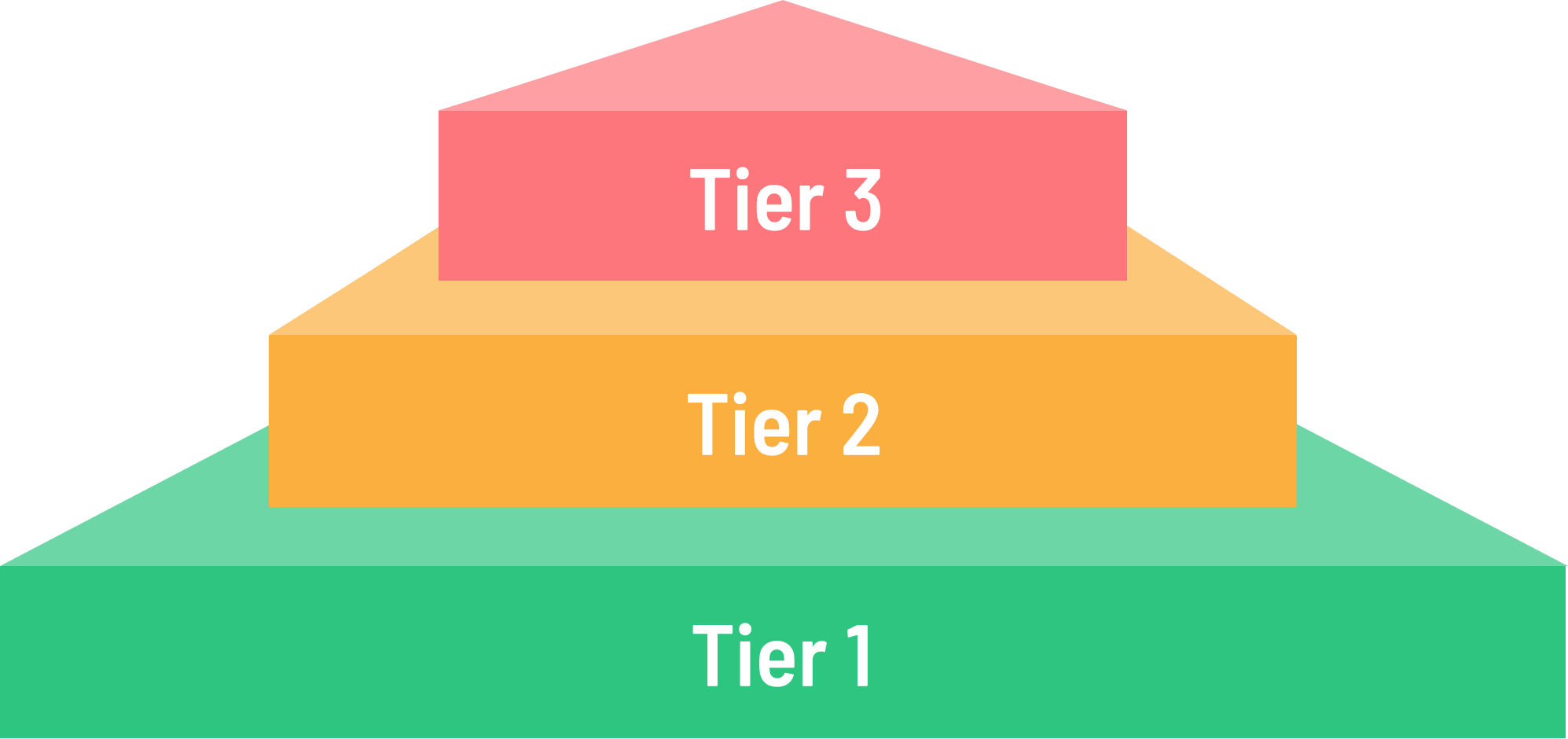
    Performance of the role is expressed in a gestalt of cognitive repudiation of novel influences. Thus, comes to exist three levels of emergent reality experienced through a subjective perspective, which both influences and is shapes reality. The synthesis of the material conditions of reality with the idealized theoretical elements of reality come to construct a reflexively dynamically collective-cooperative socio-political social life as the pinnacle of experience.


    Biology
    The base level of the three emergent levels of reality is the organismal, the biologic from which the material arises. Here exists the pillar of biological life, the root of consciousness. It provides the physical embodiment of phenomenological experience, or the capacity to perceive. It’s where our instinctual responses lie, and it is our the constraint within which we maneuver. It is the substrate from which the succeeding, dependent levels emerge.


    Social
    Then, biological level is what the emergent level of the social takes as given. Building upon the functions of the biological, the social level is to be constructed through instinct and choice. Meaning, norms, and interaction arise from semiotics, communication, and language. Forming a self, and the ensuing differentiation between it and the external world, itself allowing for identity construction, culture protrudes. The latter must be built, however. This is done through establishing a division of labor allowing the fulfillment of social roles to accomplish necessary communal tasks where the subject finds its object through cooperative self-determination. Upon this basis, the most consequential level of reality is built, laid out below.


    Political
    Of the three core tiers of experience of a shared social world arises a political sphere human life. The variety of political orientation, and thus ideological lens through which shared reality is experienced, a diverse socio-political environment develops. Maneuvering through this sphere involves diplomacy, conflict, cooperation, institutional perceptiveness, and motivated agency. We do not healthily exist in isolation. Community is essential. But that is not to be misunderstood that self-governance is not to be achieved. Much to the contrary. Although we live at the intersection of agency and institutional structures, the expression of diversity that leads to a pluralist society in which limited state involvement facilitates a conjunctive society is produced. Private property then is demonstrated as an intentional social construct.

    But, the social construction of private property is then not absolute, it is amendable. The potential for us to reach personal property relations exists. In this case, Late-stage capitalism would cease to exist, and thereby the means of productive labor would be returned to the rightful producers of it, the socially oppressed class. I give this as an example of the political nature of our social world.

    The political order we actively construct through as a result of our social capacities. Through historicization, present arrangements, and alignment of a future, actualizing tangible political gains in the socially constructed world then become possible.


    This apex tier of human experience is the realm within which the perceived experience of willful intention is had, where manipulation of the social and material environment, behavior, and thinking occurs. If it exists, and if it is not merely a belief we hold which is divorced from the negation of itself – a belief upheld, perhaps through cognitive dissidence of a fear of certainty – it is paramount. Independent of its truth, the social fabric depends on the belief in its validity; to believe otherwise would be far too harmful for social life to exist. But, this all occurs within the political sphere so essential to life.


    Implications
    At the biological level, the emerent levels of reality rewire the neurobiology and create a situation where the material basis for emergent levels of reality to grow upon limit the potential of the creation of those spaces.

    At the social level, the revolution in method of transmutation of meaning is underway in an effort to introduce an altered shared space of discourse and civil life.

    Politically, the ramifications are stark. The reorganization of the institutional structures stabilizing social life is creating a hyper-individualized self-conscious political orientation. Take generation Z, a population driven by an unsettling disjointedness for a just future. Having come to direct a futile aggressive method at a dying austere order, alternative measures must be implemented for change. The arena of socio-political life influencing, say, the “feel for the game” that institutionalization creates, lays the framework for ammendability of the socially constructed elements life. Understanding this stratified reality is not an abstract exercise but a necessary step toward grasping how we will continue to transform who we are, how we behave, and the systems we inhabit.


    An observant devotee,
    Jake