7/28/26
The human experience is as complex as anything existing in the world as we know it. There are limits to our understanding of it, but that does not make it any less valuable to attempt to describe and comprehend. With competing perspectives, no less in arguably the most consequential field of philosophic literature, itself proposing systems of description of the nature of Being and environment, it is important for us, here, to provide our own foundational perspective to contribute to the debate; a socio-philosophic understanding of, primarily, of the phenomenology shaping our reality. Proposed is a structured tier of the systematic framework allowing for the intersection of institutions and agency to arise. Influenced by sociology Associate Professor Marc Garcelon, a Max Weberian, of the University of Missouri-Kansas City, I have developed a relational structure to describe social experience.
There exist emergent levels of experienced reality, an institutional relationship between perceived Will and a structured web of means of “getting by and getting along within an established social setting,” as he aptly puts it. The latter acting as our necessary understanding of the systems that facilitate the perception of agency.
Structured Levels of Reality
Perhaps having emerged from a highly integrated habitual action with sudden self-reflexivity, a dynamic intersection of a relational element of perceived reality exists. It is not uncommon for this dynamic to be unrecognizable, however. Give yourself some grace. Awareness of this systematic relationship requires an amount of understanding of key concepts not provided in today’s education system. No less, it exists.
An indicator that institutionalization in oneself exists, self-understanding and awareness of external influences is required. Components of cognition become fused with the patterned remembrance of sustaining behaviors upholding institutionalized thought structures. Simply put, it’s the fulfillment of the obligatory element of the social role being inhabited. It’s institutionalization working at its most rational capacity.
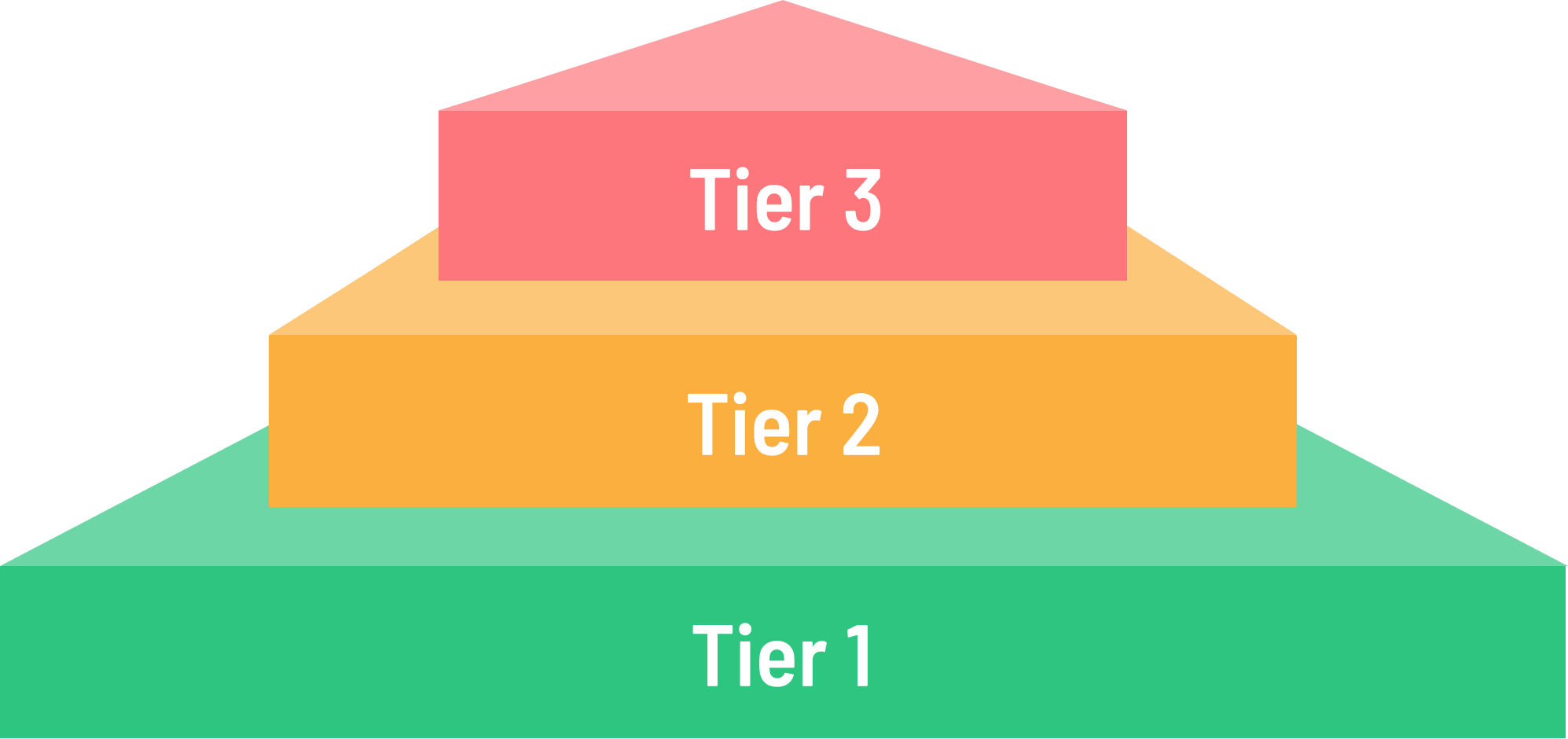
Performance of the role is expressed in a gestalt of cognitive repudiation of novel influences. Thus, comes to exist three levels of emergent reality experienced through a subjective perspective, which both influences and is shapes reality. The synthesis of the material conditions of reality with the idealized theoretical elements of reality come to construct a reflexively dynamically collective-cooperative socio-political social life as the pinnacle of experience.
Biology
The base level of the three emergent levels of reality is the organismal, the biologic from which the material arises. Here exists the pillar of biological life, the root of consciousness. It provides the physical embodiment of phenomenological experience, or the capacity to perceive. It’s where our instinctual responses lie, and it is our the constraint within which we maneuver. It is the substrate from which the succeeding, dependent levels emerge.
Social
Then, biological level is what the emergent level of the social takes as given. Building upon the functions of the biological, the social level is to be constructed through instinct and choice. Meaning, norms, and interaction arise from semiotics, communication, and language. Forming a self, and the ensuing differentiation between it and the external world, itself allowing for identity construction, culture protrudes. The latter must be built, however. This is done through establishing a division of labor allowing the fulfillment of social roles to accomplish necessary communal tasks where the subject finds its object through cooperative self-determination. Upon this basis, the most consequential level of reality is built, laid out below.
Political
Of the three core tiers of experience of a shared social world arises a political sphere human life. The variety of political orientation, and thus ideological lens through which shared reality is experienced, a diverse socio-political environment develops. Maneuvering through this sphere involves diplomacy, conflict, cooperation, institutional perceptiveness, and motivated agency. We do not healthily exist in isolation. Community is essential. But that is not to be misunderstood that self-governance is not to be achieved. Much to the contrary. Although we live at the intersection of agency and institutional structures, the expression of diversity that leads to a pluralist society in which limited state involvement facilitates a conjunctive society is produced. Private property then is demonstrated as an intentional social construct.
But, the social construction of private property is then not absolute, it is amendable. The potential for us to reach personal property relations exists. In this case, Late-stage capitalism would cease to exist, and thereby the means of productive labor would be returned to the rightful producers of it, the socially oppressed class. I give this as an example of the political nature of our social world.
The political order we actively construct through as a result of our social capacities. Through historicization, present arrangements, and alignment of a future, actualizing tangible political gains in the socially constructed world then become possible.
This apex tier of human experience is the realm within which the perceived experience of willful intention is had, where manipulation of the social and material environment, behavior, and thinking occurs. If it exists, and if it is not merely a belief we hold which is divorced from the negation of itself – a belief upheld, perhaps through cognitive dissidence of a fear of certainty – it is paramount. Independent of its truth, the social fabric depends on the belief in its validity; to believe otherwise would be far too harmful for social life to exist. But, this all occurs within the political sphere so essential to life.
Implications
At the biological level, the emerent levels of reality rewire the neurobiology and create a situation where the material basis for emergent levels of reality to grow upon limit the potential of the creation of those spaces.
At the social level, the revolution in method of transmutation of meaning is underway in an effort to introduce an altered shared space of discourse and civil life.
Politically, the ramifications are stark. The reorganization of the institutional structures stabilizing social life is creating a hyper-individualized self-conscious political orientation. Take generation Z, a population driven by an unsettling disjointedness for a just future. Having come to direct a futile aggressive method at a dying austere order, alternative measures must be implemented for change. The arena of socio-political life influencing, say, the “feel for the game” that institutionalization creates, lays the framework for ammendability of the socially constructed elements life. Understanding this stratified reality is not an abstract exercise but a necessary step toward grasping how we will continue to transform who we are, how we behave, and the systems we inhabit.
An observant devotee,
Jake